
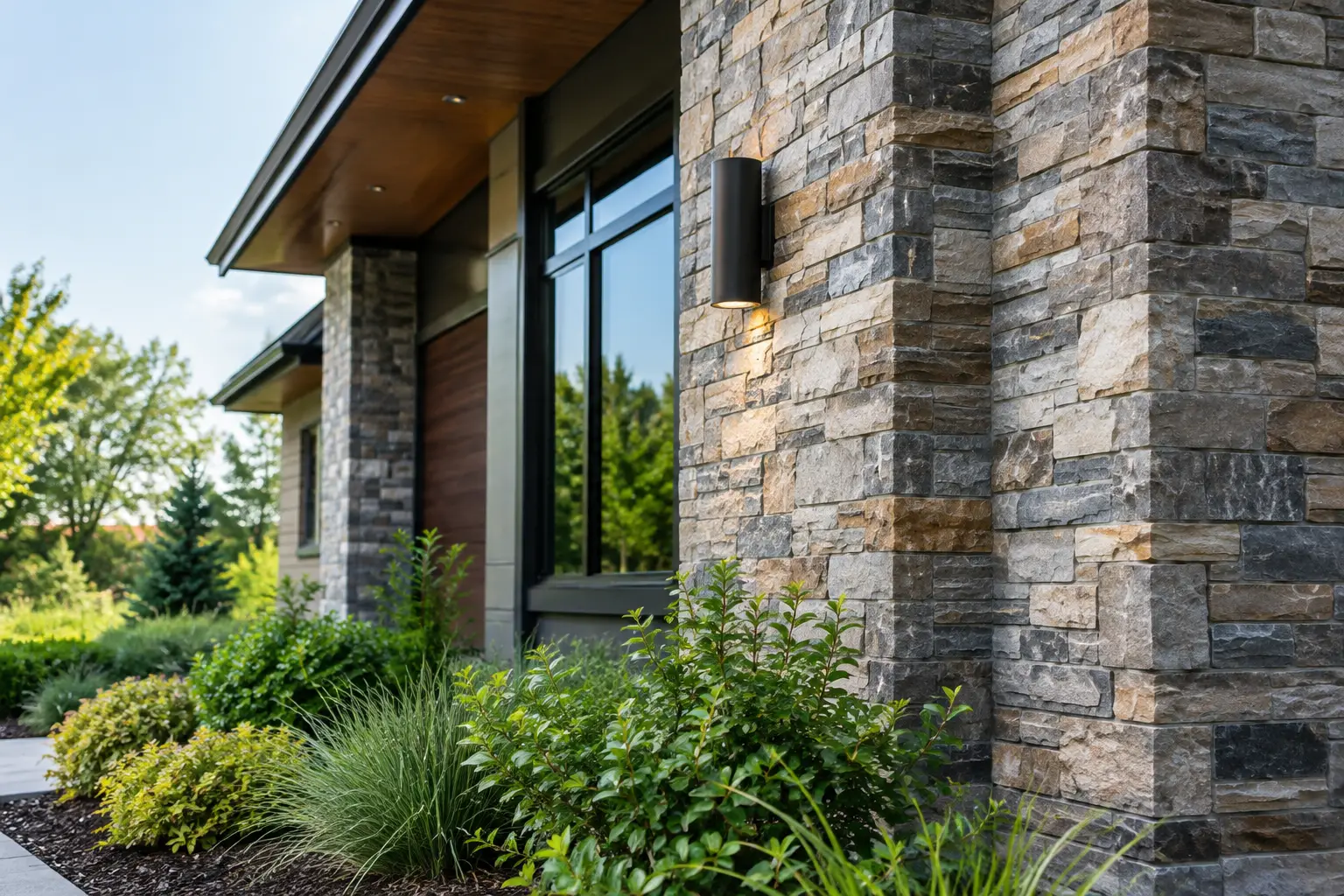
A façade is asked to do more than withstand rain, frost and summer heat. It gives a building its first expression: serene or dramatic, rooted in its setting or deliberately contemporary. Choosing the best stones for exterior cladding therefore means reading both the architecture and the material - its geological character, surface behaviour, colour movement and capacity to age with dignity.
Natural stone is never merely a finish. It is a material with a history measured in millennia, shaped by mineral composition and transformed by skilled hands. On a private residence, a hospitality project or a heritage building, the right choice can lend permanence without heaviness, and distinction without excess.
Best Stones for Exterior Cladding: What Matters Most
There is no single stone that is right for every elevation. Exposure, climate, orientation, detailing, maintenance expectations and the desired visual language all influence the decision. A pale limestone may be extraordinary on a sheltered country house, while granite may be the wiser choice for a windswept coastal façade or a heavily used urban plinth.
The first question is not simply, “Which stone is most beautiful?” It is, “How will this stone live here?” A south-facing wall receives a different quality of light from a shaded courtyard. A ventilated rainscreen behaves differently from stone fixed directly to a masonry substrate. In areas exposed to freezing conditions, low water absorption and proven frost resistance become decisive. Near the sea, salt-laden air calls for careful material selection and correctly designed fixings.
Thickness, anchoring and joint design deserve the same attention as colour and veining. A well-resolved façade allows water to drain, accommodates movement and preserves the stone’s visual calm. These technical decisions are often invisible once installation is complete, yet they determine whether beauty remains intact over generations.
Limestone: Quiet Character and Architectural Harmony
Limestone has long been associated with civic buildings, villas, historic centres and refined contemporary architecture. Its appeal lies in its softness of tone: ivory, honey, pale grey and warm beige shades that respond beautifully to changing daylight. It can make a large elevation feel settled and human, particularly where the surrounding landscape calls for visual restraint.
Not all limestones perform alike. Density, porosity and mineral content vary greatly between quarries and even within a single deposit. For exterior use, the selected stone should be assessed for water absorption, frost resistance and suitability for the proposed finish. A compact limestone can be an excellent cladding material, while a more open-textured variety may be better reserved for protected façades or less exposed architectural features.
Honed limestone gives a composed, contemporary surface. A brushed, split-face or lightly textured finish introduces shadow and tactile depth, often making it more forgiving in exposed conditions. Over time, limestone may acquire a gentle patina. For many projects, this is not a defect but part of its enduring charm.
Granite: Strength for Demanding Façades
Granite is among the most dependable choices where durability is paramount. Dense, hard and generally low in water absorption, it is well suited to severe weather, high-traffic areas and architectural elements close to the ground. It performs particularly well on plinths, entrance portals, retaining walls and façades exposed to driving rain.
Its colour range is broader than the familiar image of grey stone suggests. Granites can reveal charcoal, silver, black, warm brown, green and discreetly speckled rose tones. A flamed or bush-hammered finish heightens its mineral presence and creates a surface that catches light without glare. A finely honed granite, by contrast, can appear almost architectural in its precision.
The trade-off is expressive character. Granite tends to read as more formal and disciplined than limestone or travertine. In a design seeking warmth, this can be balanced with timber, bronze, planting or warmer-toned stone elsewhere in the composition. Its weight and hardness also demand experienced fabrication and installation planning.
Marble: A Façade with Presence
Marble carries an unmistakable cultural and artistic resonance. Its veining, luminosity and depth can turn an entrance, loggia or carefully framed elevation into a statement of timeless Italian style. Used with sensitivity, it is especially compelling for architectural details where the eye comes close: door surrounds, columns, pilasters, wall panels and sheltered courtyards.
For broad exterior cladding, marble requires a more discerning approach than granite. Some varieties are highly suitable when correctly selected, detailed and maintained; others may be vulnerable to weathering, staining or surface change in aggressive environments. White marbles, in particular, need consideration of their mineral composition, fixing system and exposure to moisture.
This does not diminish marble’s value. It simply places material knowledge before assumption. The most successful marble façades are designed around the particular slab, its direction of veining, its finish and the atmosphere it is intended to create. A book-matched composition beneath a covered entrance can have the presence of a work of art while remaining entirely architectural.
Travertine: Depth, Warmth and Roman Continuity
Travertine brings a distinctive sense of warmth to exterior architecture. Its naturally occurring pores, linear movement and range of cream, walnut and silver-grey tones create surfaces that feel both ancient and remarkably current. It has a deep association with Italian building traditions, yet it can be cut and detailed for minimalist contemporary forms.
Its open structure is part of its identity, but this demands clear choices. Filled travertine presents a more uniform appearance, while unfilled or selectively filled material retains greater texture and shadow. The appropriate solution depends on location, desired maintenance and the level of weather exposure. In many cases, a honed finish with carefully treated voids offers a refined balance between practicality and authentic character.
Travertine is particularly beautiful in projects where exterior walls continue into internal courtyards, entrance halls or garden rooms. This continuity allows the stone to carry the architecture from public threshold to private atmosphere, softening the boundary between inside and out.
Slate and Quartzite: Texture for Contemporary Architecture
For façades requiring a more graphic, tactile language, slate and quartzite offer compelling possibilities. Slate is valued for its fine cleft texture and deep tonal palette, from blue-grey to charcoal and green. Quartzite can provide similar visual depth with exceptional hardness and resistance, often accompanied by subtle crystalline reflections.
Both materials work well in contemporary residences, garden walls and landscape-led projects. Their natural split surfaces create powerful shadow lines, particularly on large, simple volumes. They are often chosen where architects want a building to feel anchored to a rugged site rather than polished away from it.
As with all natural stone, variation should be embraced rather than suppressed. The movement between individual pieces is what prevents a façade from appearing manufactured. Careful dry laying, panel selection and joint control ensure that this variation reads as intention rather than irregularity.
Finishes, Format and Detail Shape the Final Result
The same stone can appear restrained, monumental or richly decorative according to its finish and format. Large-format panels emphasise continuity and scale, but require precise engineering, appropriate thickness and carefully concealed fixing systems. Smaller coursed pieces can introduce rhythm and make a façade feel more connected to traditional masonry.
A polished finish is rarely the first answer for an exposed elevation, where reflection, maintenance and weathering must be considered. Honed, brushed, sandblasted, flamed and split-face finishes each alter the stone’s response to light and rain. The goal is not simply to select a texture, but to select one that serves the architecture.
Details at corners, window reveals, sills and coping stones carry particular importance. These are the places where water meets the façade and where craftsmanship becomes most visible. Mitred returns may create visual purity, while solid corner pieces convey mass and depth. Neither is inherently superior; the better choice depends on the building’s language and the stone itself.
A Material Chosen for Its Future
The finest exterior stonework begins with samples viewed in natural light, but it should never end there. A small sample cannot fully show the scale of a vein, the variation across a quarry block or the way a finish changes after rain. Mock-ups, slab selection and considered dialogue between architect, client and stone specialist protect the integrity of the finished work.
At Torchio Marmi, experience gained across generations of fabrication, architectural coverings and restoration informs this process: stone is chosen not only for the day it is installed, but for the decades it will inhabit. The most successful façades do not remain unchanged. They acquire a measured patina, hold the light differently with each season and become inseparable from the life of the building.
Choose a stone that belongs to the place, respect its natural qualities, and allow skilled detailing to give it a future worthy of its past.